Simulation lab · Breda, NL · 8 to 40 households
The lab and the contract
SolarPunkLab is the public logbook of a simulation lab for self-sufficient neighbourhoods, built and computed by Paul Veth. Everything published here is bound by one contract: compute honestly, even when the outcome contradicts the dream.
The future
The future I see
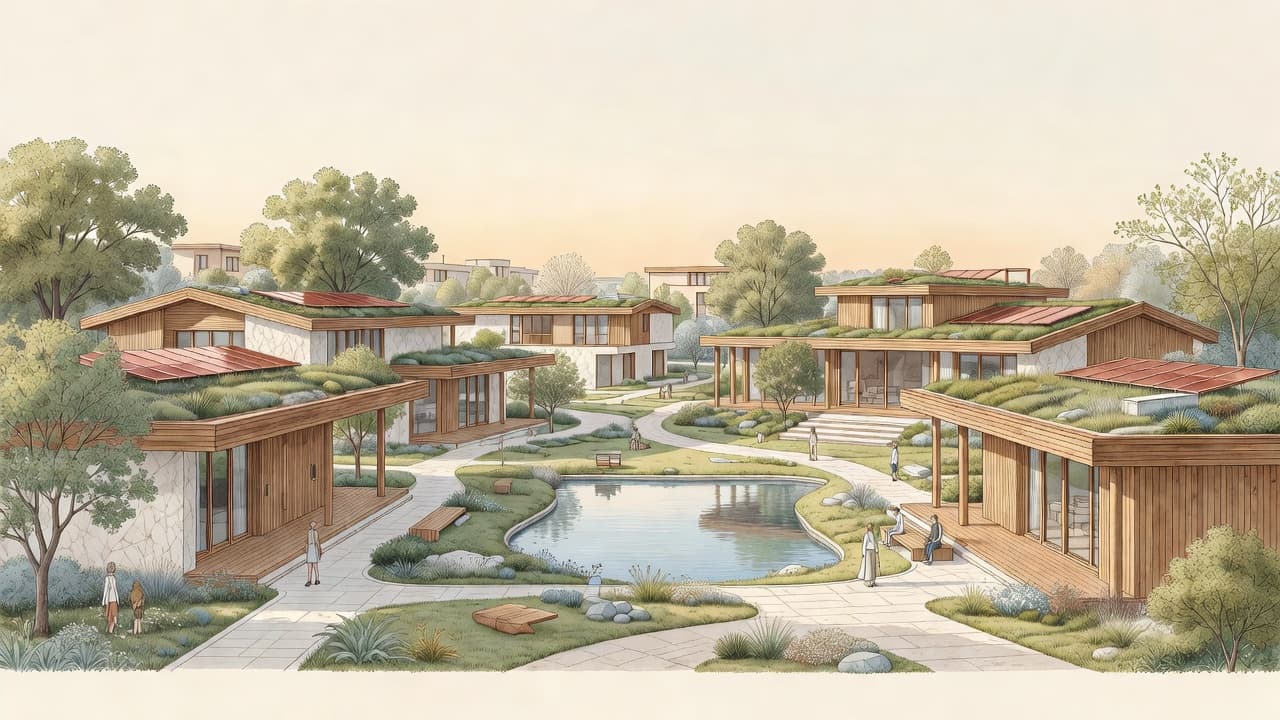
Close your eyes and walk through it for a moment. Buildings of timber, natural stone, clay and glass, with roofs full of green and solar panels that are not bolted onto the architecture but part of it. Water at the heart of the neighbourhood. Mature trees. Space. It does not feel like giving something up, it feels like luxury: light, quiet, clean air, and an energy bill that barely exists.
And it does not stay small. It starts with a court of eight households, but the same principle scales to villages and to cities where far more people can live this way. Self-sufficiency is not a hermit's dream for a handful of idealists. It is a way of building and living together that is more beautiful, healthier and ultimately cheaper than what we build today.
I believe this is possible. I hope for it, and honestly, I expect it too. And precisely because I want this future so badly, I refuse to fool myself. Every beautiful image on this site sits above a balance that has to close. The dream first, the measuring rule beneath it. That is how it should be.
The honesty contract
Every assumption is labelled. Every physical number in the model has a unit, a source and a confidence level. Low-confidence assumptions are called out, especially when a headline result leans on them.
The starting conditions work against the vision. The crossover model starts from the peer-reviewed conclusion that renovation beats new construction today. If the model shows a crossover, you set those assumptions yourself and you have to be able to defend them.
Balances close. The energy balance closes every hour to machine precision, guarded by the test suite. A result that breaks the balance is a bug, not a breakthrough.
Impressions are not blueprints. The atmospheric images on this site are AI-generated impressions and are labelled as such. They show nothing the model does not cover.
Disagreement is welcome. Every story names the assumption it leans on most. If you find an error, you improve the lab.
The builder
Who is building this?
I am Paul Veth, an entrepreneur since 2003. I build companies and instruments that make potential measurable, and this lab is my answer to a question that will not let go of me: can a small community sustain itself, and what does that honestly cost?
The solarpunk movement has the images. The energy sector has the models. And at the level where the dream has to land, the neighbourhood of eight to forty households, I have found nobody who runs the numbers. I searched for two full research sprints. That gap is exactly where this lab builds.
Everything I build starts from what is actually true: for people that is identity, for a neighbourhood it is physics. That places SolarPunkLab alongside my other companies, including Identity First Media.
The Netherlands is the lab's case country: real weather years, real consumption profiles, a net-metering scheme that ends on 1 January 2027, and new European energy-sharing rights. The physics travels; the institutions make it concrete.
- Computed, not dreamed
- Assumptions on the table
- The Netherlands as case country
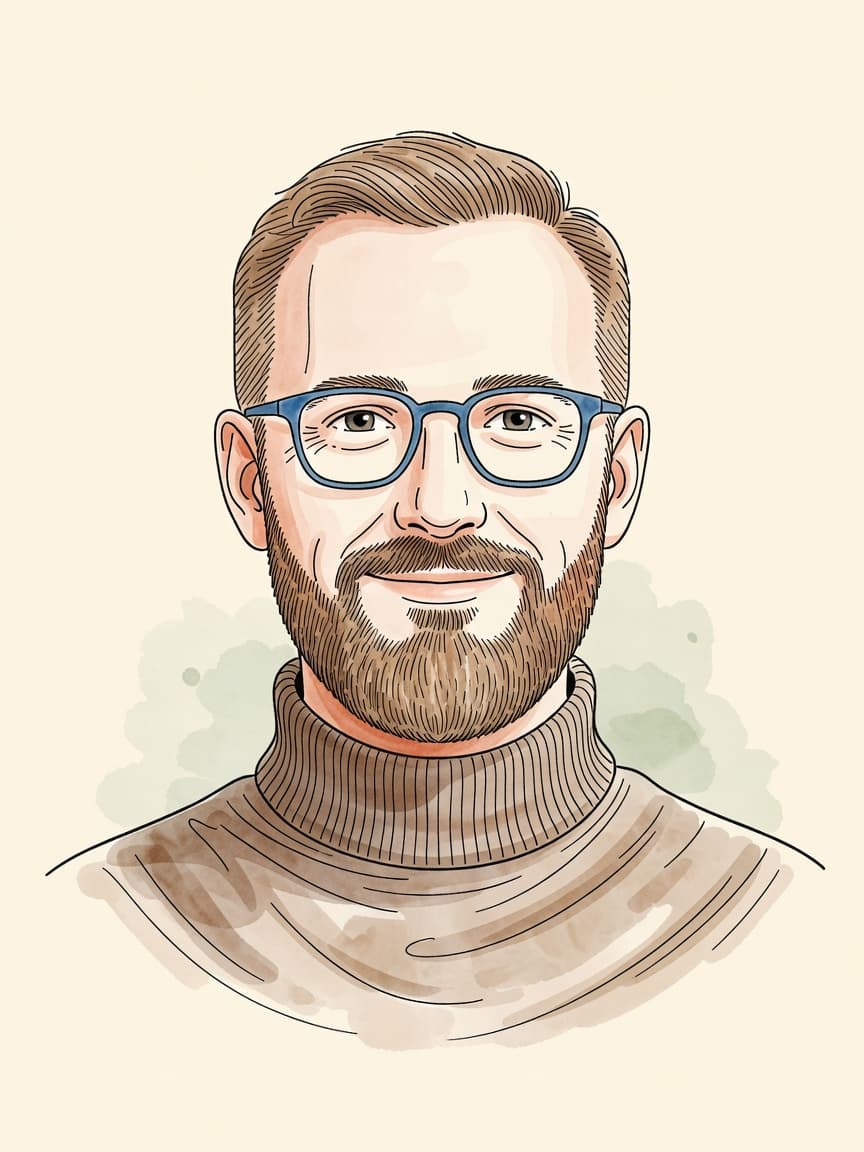
Paul Veth · AI drawing from a photograph
Open edges
What the lab does not know yet
Honesty also means naming the limits. The cost per kilowatt-hour of seasonal storage is the dial the headline result leans on, and that assumption has low confidence. Day-ahead prices still run on a clearly labelled synthetic profile until the live market feed is connected. And the behavioural parameters of the simulated households are design choices awaiting calibration.
Those gaps do not hide behind a glossy dashboard here. They sit in the log, named, until they are closed.