De batterij die roest: mijn duurste aanname kreeg eindelijk bronnen
De prijs van seizoensopslag droeg het hele model op één marktindicatie. Een dag bronnenonderzoek later: wijkschaal-waterstof is commercieel aan het verdwijnen, en de eerste netgekoppelde ijzer-luchtbatterij ter wereld draait in Delft, in containers waarvan er twee mijn hele seizoensvat vormen.
De aanname waar alles aan hangt
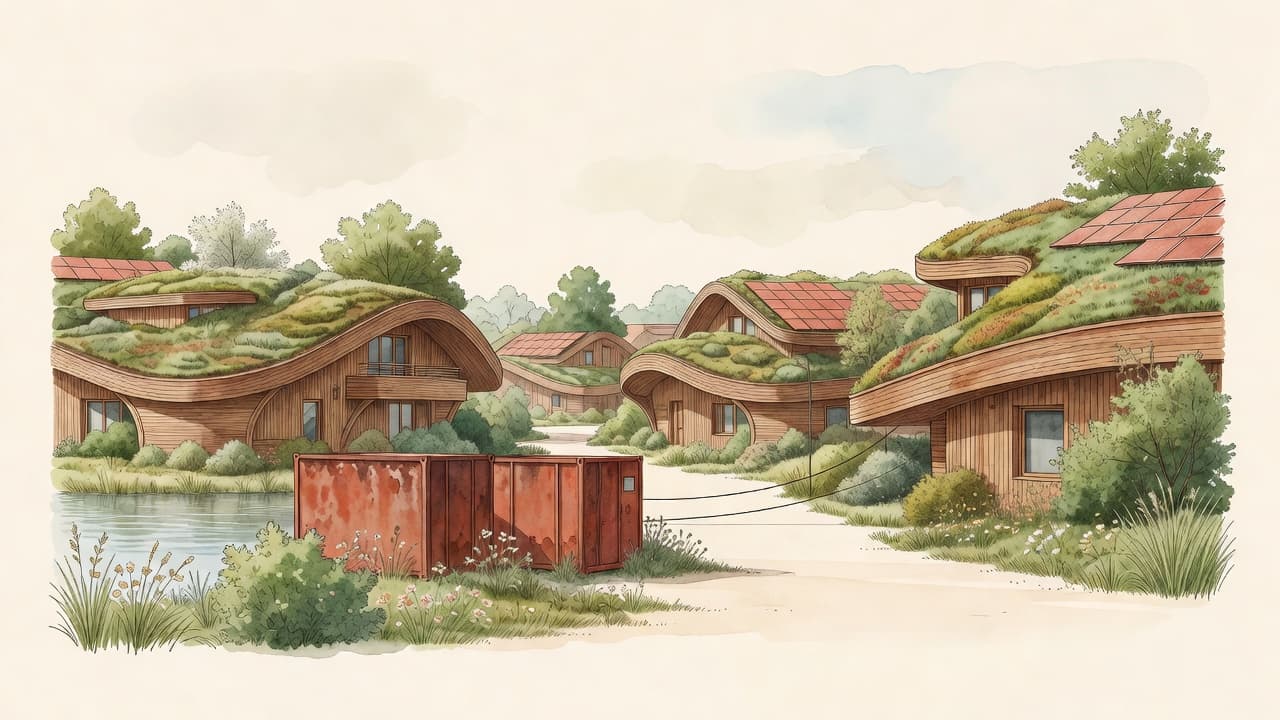
Beeld boven: AI-impressie, geen bouwtekening.
In mijn aannamenregister staat bij de prijs van seizoensopslag al weken hetzelfde ongemakkelijke label: betrouwbaarheid laag, doorslaggevend voor de conclusie. Twintig euro per kilowattuur opslagcapaciteit, het waterstofpad. De gevoeligheidsanalyse liet zien dat de hoofdconclusie de hele prijsband overleeft, van 20 tot 150 euro: seizoensopslag verslaat de pure batterijroute overal. Maar het woord "goedkoop" hangt volledig aan die ene knop.
Dus heb ik er een onderzoeksdag aan gegeven, met een vaste regel: elk cijfer krijgt een label. Gemeten, lijstprijs, gecontracteerd, claim, analistenschatting of modelstudie. Een smalle band zonder bronnen is waardeloos; een brede band met bronnen is goud.
Het pad dat verdwijnt
Het model is geparametriseerd op waterstof: elektrolyser, drukvat, brandstofcel. Er bleek precies één systeem in die klasse ooit echt te koop te zijn geweest voor gebouwen: de Duitse HPS Picea 2, zo'n 100.000 euro voor ongeveer 1.500 kWh bruikbare opslag. Dat is 67 euro per kilowattuur, alles inbegrepen. Geen 20.
En het wordt scherper: HPS is in april 2025 failliet verklaard. De lijstprijs was dus blijkbaar al een verlieslatende prijs; de werkelijke kostprijs lag hoger. Bosch stopte intussen met zijn kleine brandstofcelsysteem. Het pad waarop mijn model rekent, is op wijkschaal commercieel aan het verdwijnen.
De verklaring zit in schaal. In een zoutcaverne kost waterstofopslag 2 tot 5 cent per kilowattuur. In drukvaten op wijkschaal, met compressie, leidingwerk, veiligheidszonering en vergunning erbij, honderden keren zoveel. Mijn 20 euro was de industriële tank-prijs. Een wijk koopt geen industriële tank.
De batterij die roest
Terwijl het waterstofpad kromp, dook in het onderzoek iets anders op. IJzer-luchtbatterijen slaan energie op door ijzer gecontroleerd te laten roesten en dat roesten weer om te keren. Traag, log, met een rendement van 40 tot 50%. Maar de energiedrager is ijzer, en ijzer is spotgoedkoop per kilowattuur.
De eerste netgekoppelde ijzer-luchtbatterij ter wereld draait sinds juli 2025. Niet in Californië. In Delft. Ore Energy, een spin-off van de TU, bouwt ze in containers van 4,2 megawattuur. Het seizoensvat dat mijn model voor de 90%-wijk uitrekent, past in twee van die containers, van een Nederlandse leverancier, zonder waterstofvergunningstraject. De geclaimde prijzen liggen op 30 tot 60 euro per kilowattuur, met een rendement dat het waterstofpad verslaat. Budget Thuis tekende voor een gigawattuur; in Amerika bestelde Google er dertig bij Form Energy.
Ik parametriseerde een waterstofsysteem en de markt bouwde intussen iets dat er voor een wijk beter uitziet. Dat is geen schande voor het model. Het is wel een correctie.
Wat er met het model gebeurt
De verdedigbare band voor wijkschaal-seizoensopslag komt uit op 30 tot 100 euro per kilowattuur, met een middenwaarde rond de 60. Mijn oude 20 blijft in de gevoeligheidsanalyse staan, maar met een nieuw etiket: optimistische ondergrens, geen basisgeval. De verkenner op deze site rekende gelukkig al met 100 euro als eerlijke standaardstand; die keuze blijkt achteraf juist.
De volgende stap is een scenariovariant: ijzer-lucht naast waterstof, zelfde fysica, andere prijsstructuur en rendement. Niet als vervanging. De vergelijking zelf is het inzicht.
Waar dit op leunt
- Geen enkel getal in dit verhaal is een offerte. Ore Energy publiceert geen prijzen; de 30 tot 60 euro komt van analisten en één oude fabrieksclaim van Form Energy uit 2021.
- Zuivere seizoenscycli, één of twee per jaar, zijn niet het ontwerppunt van deze batterijen; ze zijn gebouwd voor meerdaagse opslag met tientallen cycli per jaar. Bij één cyclus per jaar telt alleen de kapitaalkost, en juist die is laag. Maar gemeten is het niet.
- Het hardste anker blijft een failliet bedrijf: de Picea-lijstprijs begrenst het totaal, niet de opbouw per kilowattuur en kilowatt.
- De eerste echte offerte-uitvraag zou het eerste gecontracteerde anker op wijkschaal zijn. Wie er één heeft, of er één wil aanvragen: ik lees mee. Het volledige bronnendossier, met elk label, staat in de lab-repo.